
Comparison guide
Lenovo Yoga 9i Gen 9 vs Framework Laptop 13 (2024): which should you choose?
Lenovo Yoga 9i Gen 9 and Framework Laptop 13 (2024) compared under one framework. One recorded specification difference is Weight: 1.3 kg on the Framework Laptop 13 (2024) against 1.36 kg on the Lenovo Yoga 9i Gen 9. Specifications and their sources are recorded alongside.
Published: 2026-06-29 · Updated: 2026-09-21
Laptops verdict
Undocumented scoring basis · overall score and upgrade ranking withheld. The table records stored representative configurations; confirm the configuration and price on the merchant page before buying.
- Lenovo Yoga 9i Gen 9: A premium 2-in-1 with a rotating soundbar — a bright OLED and smooth transitions stand out.
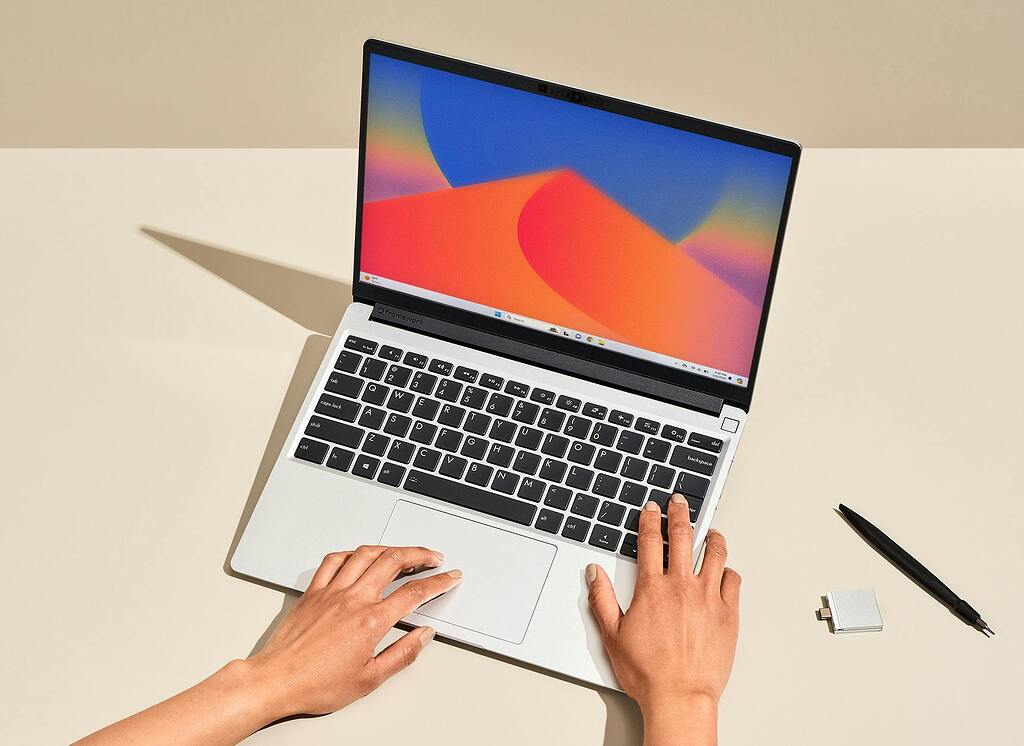
- Framework Laptop 13 (2024): A laptop you repair and upgrade yourself — pick your ports, even swap the mainboard.
- Undocumented quality and performance advantages are not ranked
- Specification field coverage (not accuracy): 100%
Choosing between Lenovo Yoga 9i Gen 9 and Framework Laptop 13 (2024) starts with the real use case and the problem to solve, not with which product is newer. No independent laboratory test is implied.
Core specifications on one baseline
| Item | Lenovo Yoga 9i Gen 9 | Framework Laptop 13 (2024) | Delta |
|---|---|---|---|
| Memory | 16 GB AskRS catalog index · check date not recorded | 16 GB AskRS catalog index · check date not recorded | Same |
| Weight | 1.36 kg AskRS catalog index · check date not recorded | 1.3 kg AskRS catalog index · check date not recorded | -4.4% |
| Battery capacity | 75 Wh AskRS catalog index · check date not recorded | 61 Wh AskRS catalog index · check date not recorded | -18.7% |
| Display brightness | 500 nits AskRS catalog index · check date not recorded | 500 nits AskRS catalog index · check date not recorded | Same |
| Refresh rate | 90 Hz AskRS catalog index · check date not recorded | 60 Hz AskRS catalog index · check date not recorded | -33.3% |
| Thunderbolt/USB-C ports | 2 AskRS catalog index · check date not recorded | 4 AskRS catalog index · check date not recorded | +100% |
| Chipset | Intel Core Ultra 7 155H | Intel Core Ultra 7 155H | Same |
| Color | Luna Grey | Silver | Different |
| Connectivity | 2x Thunderbolt 4, USB-A, Wi-Fi 6E, Bluetooth 5.3 | 4x configurable USB-C expansion cards, Wi-Fi 6E, Bluetooth 5.3 | Different |
| CPU model | Intel Core Ultra 7 155H (16C/22T) | Intel Core Ultra 7 155H (16C/22T) | Same |
| GPU model | Intel Arc Graphics | Intel Arc Graphics | Same |
| Operating system | Windows 11 | Windows 11 / Linux | Different |
| Panel | 14" OLED 2880x1800 touch 2-in-1 | 13.5" IPS 2256x1504 | Different |
| Region | GLOBAL | GLOBAL | Same |
| Screen size | 14 in | 13.5 in | -3.6% |
| Storage | 1024 GB | 512 GB | -50% |
12 of the 32 values in this table carry a source. The rest have no source on record, which is not the same as being wrong.
How to read Same, Different, No data, Unverified and Not applicable is documented on the configuration-level specification screen. If a condition you require is unknown, withhold the decision and match the exact model, sales region and configuration against the sources on that screen.
Differences recorded in the table
5 fields can be ranked on the same basis, listed by weight.
- Weight · Framework Laptop 13 (2024) 1.3 kg, Lenovo Yoga 9i Gen 9 1.36 kg (-4.4%)
- Battery capacity · Lenovo Yoga 9i Gen 9 75 Wh, Framework Laptop 13 (2024) 61 Wh (-18.7%)
- Refresh rate · Lenovo Yoga 9i Gen 9 90 Hz, Framework Laptop 13 (2024) 60 Hz (-33.3%)
- Storage · Lenovo Yoga 9i Gen 9 1024 GB, Framework Laptop 13 (2024) 512 GB (-50%)
- Thunderbolt/USB-C ports · Framework Laptop 13 (2024) 4, Lenovo Yoga 9i Gen 9 2 (+100%)
The decision axes and the checking order for the whole category are on the Laptops comparison page.
The two products this comparison names
Match the listing against these models first. The recorded-field count is catalogue completeness, not product quality.
- Lenovo Yoga 9i Gen 9 · Lenovo · model number 83AC · released 2024 · recorded fields 16/16
- Framework Laptop 13 (2024) · Framework · model number FRANGCP04 · released 2024 · recorded fields 16/16
Fields the two products share
6 recorded fields hold the same value for both stored representative configurations, so nothing in this list separates them.
- Memory · 16 GB
- Display brightness · 500 nits
- Chipset · Intel Core Ultra 7 155H
- CPU model · Intel Core Ultra 7 155H (16C/22T)
- GPU model · Intel Arc Graphics
- Region · GLOBAL
Who should choose Lenovo Yoga 9i Gen 9
Lenovo Yoga 9i Gen 9 leads the table on Battery capacity, Refresh rate, Storage. A premium 2-in-1 with a rotating soundbar — a bright OLED and smooth transitions stand out.
Who should choose Framework Laptop 13 (2024)
Framework Laptop 13 (2024) leads the table on Weight, Thunderbolt/USB-C ports. A laptop you repair and upgrade yourself — pick your ports, even swap the mainboard.
How to read price and purchase availability
No merchant link is shown: neither product has an approved listing whose name and configuration match the catalogue, and AsKrs does not guess a destination.
- Lenovo Yoga 9i Gen 9 · No verified purchase link currently available
- Framework Laptop 13 (2024) · No verified purchase link currently available
This comparison is built from published specifications and stored representative configurations. The use context, configuration checks, switching costs, and the scope and limits for Laptops are documented on the Laptops comparison page.